
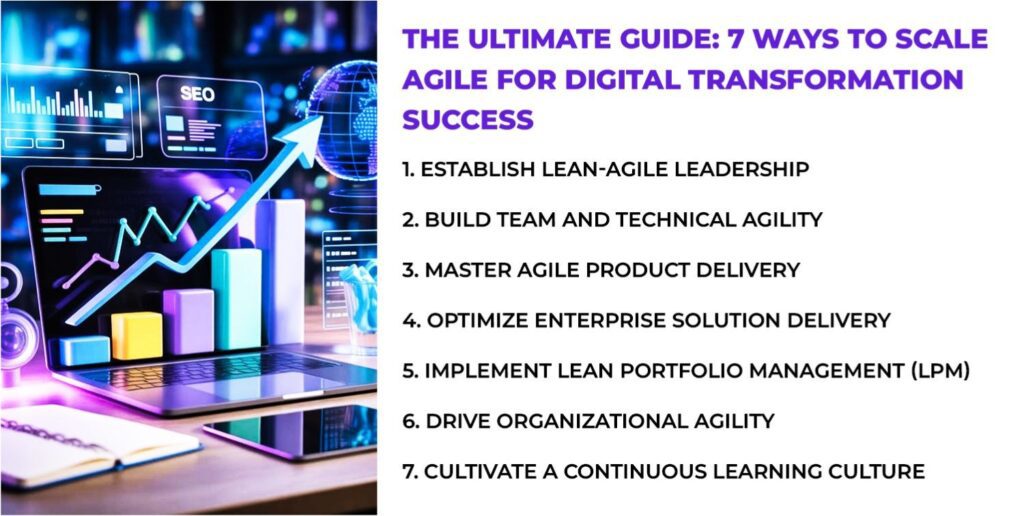
Digital transformation is no longer optional for modern businesses. Companies across industries are investing in advanced technologies, automation, cloud platforms, and customer-focused digital experiences to stay competitive. However, technology alone does not guarantee success. Organizations also need flexible processes, faster collaboration, and continuous innovation to keep up with changing market demands.
Businesses seeking long-term growth are now focusing on digital transformation scale agile solutions to align technology, operations, and customer experience under one scalable framework. When implemented correctly, scaled agile helps enterprises improve efficiency, reduce delays, and deliver consistent value across departments.
Understanding Agile in Digital Transformation
Agile is a project management and product development methodology focused on collaboration, iterative progress, flexibility, and continuous improvement. In digital transformation initiatives, agile enables businesses to respond quickly to technological changes and evolving customer expectations.
Traditional business models often rely on rigid structures and slow approval cycles. Agile replaces these outdated processes with adaptive workflows that encourage rapid experimentation and ongoing optimization.
Organizations implementing digital transformation scale agile solutions can benefit from:
- Faster product and service delivery
- Improved customer experiences
- Better cross-functional collaboration
- Reduced operational inefficiencies
- Increased innovation and adaptability
- Stronger alignment between business and IT teams
Scaling agile means extending these benefits beyond small development teams and applying them across the entire organization.
Why Scaling Agile Matters for Digital Transformation
Digital transformation initiatives usually involve multiple departments, technologies, and stakeholders. Without a scalable agile framework, organizations often face:
- Communication silos
- Delayed decision-making
- Inconsistent project priorities
- Resource management issues
- Poor collaboration between teams
- Resistance to organizational change
Scaled agile frameworks create structure while maintaining flexibility. They help enterprises coordinate large projects, manage distributed teams, and align strategic goals with execution.
1. Build a Clear Digital Transformation Strategy
Align Agile Goals with Business Objectives
The first step in scaling agile successfully is establishing a clear digital transformation strategy. Many organizations fail because they adopt agile practices without defining measurable business outcomes.
Your agile transformation should support goals such as:
- Improving customer engagement
- Increasing operational efficiency
- Accelerating software delivery
- Enhancing data-driven decision-making
- Expanding digital capabilities
Every agile initiative must connect directly to broader business objectives.
Create a Transformation Roadmap
A structured roadmap helps organizations prioritize initiatives, allocate resources, and monitor progress effectively.
A successful roadmap typically includes:
Short-Term Goals
- Team restructuring
- Agile training
- Pilot project implementation
Mid-Term Goals
- Workflow optimization
- Cross-department collaboration
- Automation integration
Long-Term Goals
- Enterprise-wide agile adoption
- Continuous innovation systems
- Scalable digital ecosystems
Organizations that invest in strategic planning gain stronger outcomes from their digital transformation scale agile solutions initiatives.
2. Adopt the Right Scaled Agile Framework
Choose a Framework That Fits Your Organization
Different organizations require different scaling approaches. Choosing the right framework depends on company size, project complexity, and operational structure.
Popular scaled agile frameworks include:
SAFe (Scaled Agile Framework)
SAFe is ideal for large enterprises managing complex digital transformation initiatives. It emphasizes alignment, collaboration, and delivery across multiple teams.
LeSS (Large-Scale Scrum)
LeSS simplifies large-scale agile implementation by applying Scrum principles to multiple teams working together on a single product.
Disciplined Agile
Disciplined Agile provides a hybrid approach that combines multiple agile methods based on organizational needs.
Selecting the right framework is essential for successful digital transformation scale agile solutions implementation.
3. Strengthen Leadership and Agile Culture
Leadership Drives Agile Success
Scaling agile requires strong leadership commitment. Executives and managers must actively support agile principles and encourage collaboration across the organization.
Leaders should focus on:
- Removing organizational barriers
- Encouraging innovation
- Supporting continuous learning
- Empowering teams
- Promoting transparency
Without leadership alignment, agile transformation efforts often lose momentum.
Build an Agile-First Culture
Agile culture goes beyond processes and tools. It involves creating an environment where employees embrace adaptability, experimentation, and teamwork.
Key elements of an agile culture include:
Open Communication
Teams should communicate openly and share feedback regularly.
Continuous Improvement
Organizations must encourage ongoing process optimization and learning.
Customer-Centric Thinking
Every team should prioritize customer needs and business value.
Companies implementing digital transformation scale agile solutions must focus equally on cultural transformation and technical modernization.
4. Invest in Agile Training and Team Development
Develop Agile Skills Across Departments
Many digital transformation initiatives fail because employees lack the skills needed for agile environments.
Comprehensive training programs help teams understand:
- Agile methodologies
- Scrum practices
- Product ownership
- Sprint planning
- Collaboration tools
- Continuous delivery principles
Training should extend beyond IT departments to include marketing, operations, HR, and leadership teams.
Create Cross-Functional Teams
Cross-functional teams improve collaboration and reduce communication gaps between departments.
An effective agile team may include:
- Developers
- Designers
- QA specialists
- Product managers
- Business analysts
- Marketing professionals
These collaborative structures support more effective digital transformation scale agile solutions across enterprise operations.
5. Leverage Automation and Modern Technology
Use Technology to Scale Agile Efficiently
Digital transformation and agile scaling rely heavily on automation and modern development tools.
Organizations should invest in:
- Cloud platforms
- DevOps pipelines
- CI/CD systems
- Project management tools
- AI-powered analytics
- Workflow automation solutions
Automation reduces manual work, minimizes errors, and accelerates product delivery.
Integrate DevOps with Agile
DevOps complements agile by improving collaboration between development and operations teams.
Benefits of combining DevOps with agile include:
Faster Deployment Cycles
Automated testing and deployment reduce release times.
Improved System Reliability
Continuous monitoring helps identify and resolve issues quickly.
Better Collaboration
Development and operations teams work together more efficiently.
Technology-driven digital transformation scale agile solutions enable organizations to scale innovation without sacrificing quality.
6. Improve Communication and Collaboration
Break Down Organizational Silos
Large organizations often struggle with disconnected departments and fragmented communication.
Scaled agile environments require strong collaboration between:
- IT teams
- Marketing departments
- Product management
- Operations
- Customer support
- Executive leadership
Transparent communication ensures alignment across projects and business goals.
Use Agile Collaboration Tools
Modern collaboration tools help distributed teams work more effectively.
Popular agile collaboration tools include:
- Jira
- Trello
- Asana
- Microsoft Teams
- Slack
- Confluence
These platforms improve visibility, sprint tracking, and real-time communication.
Organizations implementing digital transformation scale agile solutions should prioritize collaboration infrastructure to maintain agility at scale.
7. Measure Performance and Continuously Optimize
Track Agile Transformation Metrics
Scaling agile successfully requires continuous measurement and optimization.
Important metrics include:
Delivery Speed
Measure how quickly teams complete projects and releases.
Customer Satisfaction
Track customer feedback and engagement improvements.
Team Productivity
Evaluate sprint performance and workflow efficiency.
Operational Efficiency
Monitor cost reductions and process improvements.
Encourage Continuous Feedback Loops
Agile thrives on continuous learning and adaptation.
Organizations should regularly conduct:
- Sprint retrospectives
- Performance reviews
- Customer feedback sessions
- Process audits
- Stakeholder evaluations
Continuous optimization ensures long-term success for digital transformation scale agile solutions initiatives.
Common Challenges in Scaling Agile
Even with the right strategy, organizations may face several challenges during agile transformation.
Resistance to Change
Employees accustomed to traditional workflows may resist agile adoption.
Inconsistent Agile Practices
Different teams may interpret agile principles differently, leading to inconsistencies.
Lack of Leadership Support
Without executive commitment, agile initiatives often fail to scale effectively.
Technology Limitations
Outdated systems can slow down digital transformation efforts.
Addressing these challenges proactively improves transformation outcomes significantly.
Benefits of Scaling Agile for Digital Transformation
Organizations that successfully scale agile experience substantial long-term benefits.
Faster Innovation
Agile environments enable rapid experimentation and faster product development.
Improved Customer Experience
Businesses can respond quickly to customer needs and market trends.
Greater Business Agility
Organizations become more adaptable to changing technologies and economic conditions.
Enhanced Collaboration
Cross-functional teamwork improves communication and operational alignment.
Better ROI on Digital Investments
Efficient processes and faster delivery increase the value of technology investments.
These advantages make digital transformation scale agile solutions a critical strategy for modern enterprises.
FAQS
What are digital transformation scale agile solutions?
Digital transformation scale agile solutions are enterprise-level strategies and frameworks that combine digital transformation initiatives with scalable agile methodologies to improve innovation, efficiency, and collaboration.
Why is scaling agile important for large organizations?
Scaling agile helps large organizations coordinate multiple teams, improve communication, accelerate project delivery, and align business goals with digital transformation strategies.
Which agile framework is best for digital transformation?
The best framework depends on organizational needs. SAFe is commonly used for large enterprises, while Scrum@Scale and LeSS are suitable for organizations seeking simpler agile scaling approaches.
How long does agile transformation usually take?
Agile transformation timelines vary based on company size, organizational complexity, leadership involvement, and technology readiness. Many enterprises see measurable improvements within 6 to 18 months.
Conclusion
Digital transformation success requires more than adopting new technologies. Organizations must also create agile, scalable systems that support continuous innovation, collaboration, and operational flexibility.Modern organizations that embrace digital transformation scale agile solutions gain a significant competitive advantage through faster delivery, improved customer experiences, and stronger business adaptability.